I found these on a blog, they are said to be from a little book called "Disorder in the Court" which I believe is by Bob Terrell.
All of these are said to be real quotations from actual court cases and I have to say that most are very funny. I especially like the ones about autopsies:
Q: What is your date of birth?
A: July fifteen.
Q: What year?
A: Every year.
---------------------------------------------------
Q: What gear were you in at the moment of the impact?
A: Gucci sweats and Reeboks.
---------------------------------------------------
Q: This myasthenia gravis, does it affect your memory at all?
A: Yes.
Q: And in what ways does it affect your memory?
A: I forget.
Q: You forget. Can you give us an example of something that you've forgotten?
---------------------------------------------------
Q: How old is your son, the one living with you?
A: Thirty-eight or thirty-five, I can't remember which.
Q: How long has he lived with you?
A: Forty-five years.
---------------------------------------------------
Q: What was the first thing your husband said to you when he woke that morning?
A: He said, "Where am I, Cathy?"
Q: And why did that upset you?
A: My name is Susan.
---------------------------------------------------
Q: And where was the location of the accident?
A: Approximately milepost 499.
Q: And where is milepost 499?
A: Probably between milepost 498 and 500.
---------------------------------------------------
Q: Sir, what is your IQ?
A: Well, I can see pretty well, I think.
---------------------------------------------------
Q: Did you blow your horn or anything?
A: After the accident?
Q: Before the accident.
A: Sure, I played for ten years. I even went to school for it.
---------------------------------------------------
Q: Trooper, when you stopped the defendant, were your red and blue lights flashing?
A: Yes.
Q: Did the defendant say anything when she got out of her car?
A: Yes, sir.
Q: What did she say?
A: What disco am I at?
---------------------------------------------------
Q: Now doctor, isn't it true that when a person dies in his sleep, he doesn't know about
it until the next morning?
---------------------------------------------------
Q: The youngest son, the twenty-year old, how old is he?
---------------------------------------------------
Q: Were you present when your picture was taken?
---------------------------------------------------
Q: Was it you or your younger brother who was killed in the war?
---------------------------------------------------
Q: Did he kill you?
---------------------------------------------------
Q: How far apart were the vehicles at the time of the collision?
---------------------------------------------------
Q: You were there until the time you left, is that true?
---------------------------------------------------
Q: How many times have you committed suicide?
---------------------------------------------------
Q: So the date of conception (of the baby) was August 8th?
A: Yes.
Q: And what were you doing at that time?
---------------------------------------------------
Q: She had three children, right?
A: Yes.
Q: How many were boys?
A: None.
Q: Were there any girls?
---------------------------------------------------
Q: You say the stairs went down to the basement?
A: Yes.
Q: And these stairs, did they go up also?
--------------------------------------------------
Q: Mr. Slatery, you went on a rather elaborate honeymoon, didn't you?
A: I went to Europe, Sir.
Q: And you took your new wife?
---------------------------------------------------
Q: How was your first marriage terminated?
A: By death.
Q: And by whose death was it terminated?
---------------------------------------------------
Q: Can you describe the individual?
A: He was about medium height and had a beard.
Q: Was this a male, or a female?
---------------------------------------------------
Q: Is your appearance here this morning pursuant to a deposition notice
which I sent to your attorney?
A: No, this is how I dress when I go to work.
---------------------------------------------------
Q: Doctor, how many autopsies have you performed on dead people?
A: All my autopsies are performed on dead people.
---------------------------------------------------
Q: All your responses must be oral, OK? What school did you go to?
A: Oral.
---------------------------------------------------
Q: Do you recall the time that you examined the body?
A: The autopsy started around 8:30 p.m.
Q: And Mr. Dennington was dead at the time?
A: No, he was sitting on the table wondering why I was doing an
autopsy.
---------------------------------------------------
Q: Are you qualified to give a urine sample?
---------------------------------------------------
Q: Doctor, before you performed the autopsy, did you check for a pulse?
A: No.
Q: Did you check for blood pressure?
A: No.
Q: Did you check for breathing?
A: No.
Q: So, then it is possible that the patient was alive when you began
the autopsy?
A: No.
Q: How can you be so sure, Doctor?
A: Because his brain was sitting on my desk in a jar.
Q: But could the patient have still been alive nevertheless?
A: It is possible that he could have been alive and practicing law somewhere.
---------------------------------------------------
Q: You were not shot in the fracas?
A: No, I was shot midway between the fracas and the navel.
Monday, March 05, 2007
This is just a very brief announcement that today I opened a new shop which offers a selection of poetry, prayers and scripture on tiles. It is called, appropriately enough, VerseTile
We have launched the poetry section with some brand new items featuring poems by Emily Dickinson to which we will soon be adding many more works by poets from both sides of the pond. In the prayer section you will find tiles and tile boxes with the Lord's Prayer, the Serenity Prayer and the St Francis Peace Prayer, some accompanied by an image of stained glass. Last, not least, the scripture section begins with quotations from both Old and New Testaments including the ever-popular 23rd and 121st psalms, Jesus The Good Shepherd, the parable of the good Samaritan and Micah 6:8.
We have launched the poetry section with some brand new items featuring poems by Emily Dickinson to which we will soon be adding many more works by poets from both sides of the pond. In the prayer section you will find tiles and tile boxes with the Lord's Prayer, the Serenity Prayer and the St Francis Peace Prayer, some accompanied by an image of stained glass. Last, not least, the scripture section begins with quotations from both Old and New Testaments including the ever-popular 23rd and 121st psalms, Jesus The Good Shepherd, the parable of the good Samaritan and Micah 6:8.
Monday, June 26, 2006
Just a quick mention of 2 new sections on CafePress. The first is called 'The Serenity Prayer' and includes quite a selection of items which combine the Serenity Prayer with some beautiful images of stained glass. The second is similar but I have just called it "Recovery" and have included a couple of items with images which I think are appropriate though nothing to do with stained glass.
Please check them out and pass them along to anyone you think might appreciate them.
Please check them out and pass them along to anyone you think might appreciate them.
Saturday, April 29, 2006
This week I announced the forthcoming publication date for my first novel, 'Risk Premium', a contemporary thriller with a plot which I think that readers will find to be both relevant and controversial.
In order to publicize it I have created a website RiskPremium.net where you can read Chapter 1 in its entirity. However, I defy anyone to figure out what the plot of the book will be from what is online.
Copies can be purchased in advance from the website including a special signed and numbered limited hard-back edition.
In order to publicize it I have created a website RiskPremium.net where you can read Chapter 1 in its entirity. However, I defy anyone to figure out what the plot of the book will be from what is online.
Copies can be purchased in advance from the website including a special signed and numbered limited hard-back edition.
Saturday, February 11, 2006
Earlier this week I was lucky enough to catch part of the live coverage of the press conference for the release of the Lazard report about Time Warner which had been commissioned by Carl Icahn.
I have not read the Lazard report and have no idea whether the proposed break-up into four units is the best way forwards but I do believe that the management of Time Warner in recent years has been less than stellar and that fundamental changes are likely to be necessary if shareholder value is to be realised.
Carl Icahn observed the tendency for people to sometimes "fall in love" with things to the point where judgements can become irrational. I liked the example he cited of the Alec Guinness character in Bridge Over the River Kwai who threw all of his energy and focus and emotion into building a bridge for the Japanese and became so emotionally attached to it that he attempted to block an attempt by the British to destroy it. Carl postulated that Dick Parsons appeared to have fallen in love with the corporate structure in Time Warner, much to the detriment of operating performance and shareholder value.
Several things strike me about this whole situation. The first is that, as so often happens, the incumbent management adopts a defensive posture and dissipates valuable resources in attempts to "fight off" the dissident shareholders. In my opinion this makes absolutely no sense and can only reinforce one's view that turf and egos are seen as more important than shareholder value. If increasing shareholder value is a truly an objective that is shared by both incumbent management and dissident shareholders then the ONLY logical course is for there to be dialogue about the strategies for achieving it.
It is entirely possible that the break-up recommended by Lazard is not the best way to go. Most of the financial press coverage I have read points to a number of reasons why the sales of the 4 businesses might not realise the intended values, However, if another course is to be followed then there are things which the incumbent management HAS to do going forwards, the most noteworthy being to facilitate more operational independence, eliminate dissynergies and cut much of the 40% increase in corporate cost which has been added in recent years. Perhaps a combination of some spin-offs and aggressive reorganisation and refocusing would be the best way to go but this is only likely to be achieved following an open-minded dialogue between the interested parties.
It does strike me that if Carl Icahn's group is going to stand a chance of winning a proxy fight it will be necessary for them to pursue the campaign in many different ways. The sheer size of Time Warner and the diversity of shareholders gives this proxy battle some unique characteristics particularly when the target is a media conglomerate headed by an individual who is said to be very skilled at campaigning and managing public opinion.
Another thing which I think would help and which would move this campaign into the 21st century is a website. During the last Presidential election I noticed that both sides made extensive use of the internet and to good effect. In this case what I would envision is a site where one could read and download the Lazard report, read bios and commentaries by the major players and find articles and information in support of the proxy fight objectives. There would also be news and business info about Time Warner and some kind of discussion board to allow people to add and share opinions.
I would see both of these adding constructively to the entire process of maximising shareholder value, in no small measure. Without knowing all of the details I have a fundamental belief that by far the best solution will be reached after extensive dialogue among many people. What needs to happen is for the underlying issues to be clearly spelled out and addressed and resolved. Whether the resolution absolutely requires that parts of the business be spun off or simply given the freedom to operate is entirely debatable, in my view, but there has to be full discussion and agreement on what are the underlying issues and it would appear to me that the incumbent mangement is not on that page yet.
An excellent example of a situation where the incumbent management has entered into a meaningful dialogue with dissident shareholders to good effect is the case of GM which has been subject to pressure from dissident shareholders led by Kirk Kerkorian. In this case, Rick Wagoner, CEO and clearly a consensus builder, has not only listened but has also implemented several of the actions suggested by Kerkorian's group. Admittedly the dynamics are very different and GM is in far worse shape than Time Warner but the principles are the same and the only real difference is that in the case of GM both management and dissident shareholders appear to be in total agreement concerning the fundamentals.
OK, I've said my piece......
I have not read the Lazard report and have no idea whether the proposed break-up into four units is the best way forwards but I do believe that the management of Time Warner in recent years has been less than stellar and that fundamental changes are likely to be necessary if shareholder value is to be realised.
Carl Icahn observed the tendency for people to sometimes "fall in love" with things to the point where judgements can become irrational. I liked the example he cited of the Alec Guinness character in Bridge Over the River Kwai who threw all of his energy and focus and emotion into building a bridge for the Japanese and became so emotionally attached to it that he attempted to block an attempt by the British to destroy it. Carl postulated that Dick Parsons appeared to have fallen in love with the corporate structure in Time Warner, much to the detriment of operating performance and shareholder value.
Several things strike me about this whole situation. The first is that, as so often happens, the incumbent management adopts a defensive posture and dissipates valuable resources in attempts to "fight off" the dissident shareholders. In my opinion this makes absolutely no sense and can only reinforce one's view that turf and egos are seen as more important than shareholder value. If increasing shareholder value is a truly an objective that is shared by both incumbent management and dissident shareholders then the ONLY logical course is for there to be dialogue about the strategies for achieving it.
It is entirely possible that the break-up recommended by Lazard is not the best way to go. Most of the financial press coverage I have read points to a number of reasons why the sales of the 4 businesses might not realise the intended values, However, if another course is to be followed then there are things which the incumbent management HAS to do going forwards, the most noteworthy being to facilitate more operational independence, eliminate dissynergies and cut much of the 40% increase in corporate cost which has been added in recent years. Perhaps a combination of some spin-offs and aggressive reorganisation and refocusing would be the best way to go but this is only likely to be achieved following an open-minded dialogue between the interested parties.
It does strike me that if Carl Icahn's group is going to stand a chance of winning a proxy fight it will be necessary for them to pursue the campaign in many different ways. The sheer size of Time Warner and the diversity of shareholders gives this proxy battle some unique characteristics particularly when the target is a media conglomerate headed by an individual who is said to be very skilled at campaigning and managing public opinion.
Another thing which I think would help and which would move this campaign into the 21st century is a website. During the last Presidential election I noticed that both sides made extensive use of the internet and to good effect. In this case what I would envision is a site where one could read and download the Lazard report, read bios and commentaries by the major players and find articles and information in support of the proxy fight objectives. There would also be news and business info about Time Warner and some kind of discussion board to allow people to add and share opinions.
I would see both of these adding constructively to the entire process of maximising shareholder value, in no small measure. Without knowing all of the details I have a fundamental belief that by far the best solution will be reached after extensive dialogue among many people. What needs to happen is for the underlying issues to be clearly spelled out and addressed and resolved. Whether the resolution absolutely requires that parts of the business be spun off or simply given the freedom to operate is entirely debatable, in my view, but there has to be full discussion and agreement on what are the underlying issues and it would appear to me that the incumbent mangement is not on that page yet.
An excellent example of a situation where the incumbent management has entered into a meaningful dialogue with dissident shareholders to good effect is the case of GM which has been subject to pressure from dissident shareholders led by Kirk Kerkorian. In this case, Rick Wagoner, CEO and clearly a consensus builder, has not only listened but has also implemented several of the actions suggested by Kerkorian's group. Admittedly the dynamics are very different and GM is in far worse shape than Time Warner but the principles are the same and the only real difference is that in the case of GM both management and dissident shareholders appear to be in total agreement concerning the fundamentals.
OK, I've said my piece......
Saturday, December 03, 2005
A new ornaments page was added to Stained Glass Photography earlier today. Although great for Christmas these ornaments are great for gifts and special occasions the whole year round. Whether it is for a First Communion, a Baptism, a Confirmation, a birthday, an anniversary or just about any occasion we will try to create an ornament for you. Here is our current offering
Sunday, November 06, 2005
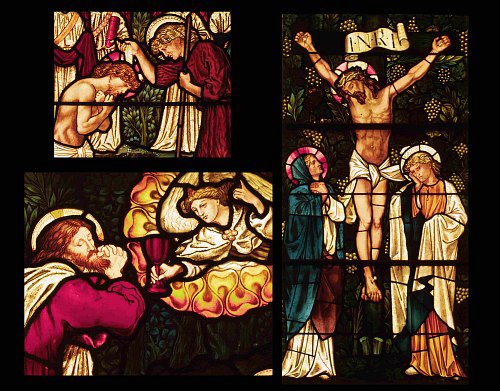
New William Morris Stained Glass calendar.
Today we not only launched our new William Morris calendar but we also set up a web-page on StainedGlassPhotography.com so that people can buy it direct from us (rather than from CafePress) at a discounted price AND with FREE shipping for the US. We will be asking customers to be a little patient because the low pricing means batching of orders placed on CafePress and double-shipping but that's the cost of doing business cheaply.
The calendar is already being very well received by William Morris affectionados, and so it should. It is a unique and original work featuring hitherto unpublished images showing details from the very first William Morris Company stained glass commission for an American client. The designs which make up the Vanderpoel Memorial Window are a microcosm of Morris works from the 1860's and 1870's. The designs include works by Edward Burne-Jones, Ford Madox Brown and William Morris himself and, when I photographed it, the window was in an excellent state of repair.
So far we have published 2 calendars but I do have ideas for a 3rd, 4th and even 5th if I get around to them.
http://www.stainedglassphotography.com/Calendars
Saturday, October 08, 2005
Anyone who has followed either my website or this blog for a year or more will recall that in 2004 Fr Tim Butler and I worked on a slide-show using stained glass images with a Christmas theme and that this was made available for use at US and Allied bases throughout the Asian theatre of operations and possibly beyond. Fr Tim was on a 1-year posting at the USAF base in Kyrgyzstan and initially the slideshow was for him to brighten up the otherwise spartan worshipping space for the Christmas services but when it was done we made it available to other bases via internet download. To this day I have no clue how many chaplains, if any, took advantage of it and my hope is that, if we embark on the same exercise this year and begin sooner, we will achieve a wider circulation.
Anyway, all of that is just background. The guts of this post is to share (I trust without his objection) an email which Fr Tim recently sent to friends, family and contacts which details some of his recent experiences during and after hurricane Katrina. Everyone will have seen the news footage and press coverage but this provides some reportage from a very personal level and I think that many will find it interesting and perhaps even inspiring. I will not edit it in any way:
Dear Friends,
I want all of you to know that I am safe … and doing well. As you know we in Biloxi, MS, were devastated by Hurricane Katrina, which was a strong Category 4 storm when it made landfall. We had no idea the level of devastation this storm would produce. Having been through a couple Hurricanes since my arrival here last year, with only minor damage and effects, I did not expect this. However, as the storm moved closer, all of us began to get a sense that this might be significantly different. Because my boss’ wife is chronically ill, I was put in charge of the 6 chaplains and 2 chaplain assistants who stayed for this crisis. So, I sheltered on base with our students and staff (6000+).
As you know by now, we weathered the storm with not a single life lost among those who sheltered here. Because I am considered “mission essential” (I sit on the general’s Crisis Action Team staff and manage the chaplain function) I was allowed to shelter Dusty and Marigold, my two cats, on base in our Pet Haven. All of our pets who were sheltered on base survived. That is all good news! There is more. Yesterday, I was finally able to get off base to see if my apartment was still standing. Since I live near the beach, in an area where there has been nearly total devastation according to various reports, I didn’t expect there to be anything left. To my great surprise, not only was the apartment standing by the interior was intact. I only sustained a small amount of water damage from a leak in the guestroom roof. My car also made it through the storm with only minor scratches. Most had their windows blown out. Many were crushed flooded or crushed by trees. This is all so good because it frees me from beginning the claims process to keep focused on taking care of my team and proceeding with our ministry to those remaining on the base.
Life at Keesler will never be the same. Our training mission has been suspended. All of our students have been sent to other training bases. All the hospital patients have been evacuated to Texas. Those who evacuated with their families will not be coming back for some time … and families will not be allowed to return except to salvage what they can from their houses. The military family housing areas sustained the worst damage. All of our commander’s houses, because they were along the back bay, have been destroyed. The walls facing the bay were blown out, the interiors flooded, trees crushed the roofs, and one burned to the ground. The other houses in those areas were flooded, sustained significant wind damage, or were crushed by trees. Many cars parked in carports were flooded, moved across streets by the surge, overturned or cut in half by trees. The Base Exchange (department store) and Commissary (grocery store) were flooded with 6 feet of water inside (about 12 outside). Everything was lost. Many of our professional buildings were flooded, ravaged by the wind, or crushed by trees. Interestingly, not a single one of our 4 chapels sustained any significant damage … nor did the Fishbowl Student Ministry Center were I worked!
We are fortunate to be on base. In the local area there is great suffering. We have not had live television since the storm hit. I have heard reports and seen pictures of the devastation, especially in nearby New Orleans. But not having T.V. is probably a good thing because it could debilitating … and we have a mission to carry on at the moment .
Driving through a couple of neighborhoods yesterday, on the way to my apartment, was heartbreaking. Those who did not evacuate and survived are shell-shocked. Most are simply sitting on their stoops with blank expressions on their faces. There is little food and nearly any water. I stopped by the local Catholic Church to see if any of the priests stayed and needed anything. The elderly monsignor, who weathered the storm in the convent with one of the seminarians who was living there for the summer, was sitting in the garage in his underwear. I asked him, “Monsignor, do you have any food?” He replied, “Do you need some?” “No,” I said, “I came to see if you did.” Truth be told, he only had enough food and water for 2 more days! I was overwhelmed. When I left I took him in my arms, crying, and said, “Don’t worry about anything. I’ll bring you food and water every couple of days.” Our mission is likely to include humanitarian as well as base reconstitution in the days, weeks, and months to come.
We are also fortunate to be on base because we are protected by our security forces (police). I assume I don’t have to tell you things have devolved into serious lawlessness here. While we are not under Marshall Law at the moment … like New Orleans … it could come to that. There are roving gangs of youth looting, car-jacking, and adding further destruction to people’s personal homes and businesses. The mall just around the corner from my apartment complex, for example, has been completely emptied. While I did not witness any of this personally while driving to check out my apartment, I got a very uneasy feeling from many of those I saw walking the streets. I wouldn’t dare go off base at night. So safety and security are huge issues here at the moment and being on base is a good thing.
I have been blest with a great chapel team to assist me. I have a wonderful chaplain assistant, MSgt Clemmons, here with me at the Crisis Action Team. I wouldn’t be able to manage all this without him. Interestingly, we first met and worked together in Saudi Arabia 11 years ago. He just came to Keesler a month ago as our senior enlisted chaplain assistant. Because we already know each other and have worked well together in the past, being together through this has been a blessing. Who would have thought that working relationship, forged so many years ago, would be crucial so many years later! I also have 5 very good chaplains and 1 other chaplain assistant taking great care of our people. Most of them are new to active duty and have never been through anything like this before. Yet, they are shining in this moment of testing and doing the Chaplain Service proud. I am so honored to work with them. Taking care of them so they can take care of others is a big part of my job right now. They are taking care of me, too.
Everyone in the Air Force is focused on Keesler Air Force Base at the moment and we are getting great support. Having to sit in the “hot seat” at this moment isn’t fun … but it is a privilege and I don’t feel like I’m doing it alone. I feel supported at the highest levels. Speaking of that, I have asked Air Staff (those at the top) for Chaplain Service relief. I hope to be getting 6 teams (a team consists of 1 chaplain and 1 chaplain assistant) in a few days. They will augment my team, providing relief for all of us and a chance for 2 of my chaplains who had their families shelter with them here to relocate them elsewhere, get their kids in school, and then return to the base to continue our recovery and reconstitution. Life for them, as well as for all our personnel who evacuated, is drastically changed … and will be challenging over the next 2 years. All will be separated from their families for the remainder of their assignment here.
While the base is somewhat of an oasis at this point, because the clean up on base has gone well and the reconstruction is beginning, outside the gate is still a warzone. I live near the beach (about 3 city blocks in) ... so, I see it daily as I go to and from work. Overall, it has been an exhausting experience. My emotions are still raw ... but my experiences are rich. What a blessing to be a priest at this time and in this place!
As you can imagine, God has been the only "still point" for me this last month. In fact, all of us who are struggling through this human tragedy know something clearly … something we all sometimes forget: God is our only sure hope in this constantly changing world! May you know His love deeply today and may that knowledge lead you to place God first in your life … and glorify Him in everything you do …
Please keep the prayers coming. I cannot do this without you … and I feel genuinely sustained by your love and faith.
Sincerely,
Fr. Tim
Anyway, all of that is just background. The guts of this post is to share (I trust without his objection) an email which Fr Tim recently sent to friends, family and contacts which details some of his recent experiences during and after hurricane Katrina. Everyone will have seen the news footage and press coverage but this provides some reportage from a very personal level and I think that many will find it interesting and perhaps even inspiring. I will not edit it in any way:
Dear Friends,
I want all of you to know that I am safe … and doing well. As you know we in Biloxi, MS, were devastated by Hurricane Katrina, which was a strong Category 4 storm when it made landfall. We had no idea the level of devastation this storm would produce. Having been through a couple Hurricanes since my arrival here last year, with only minor damage and effects, I did not expect this. However, as the storm moved closer, all of us began to get a sense that this might be significantly different. Because my boss’ wife is chronically ill, I was put in charge of the 6 chaplains and 2 chaplain assistants who stayed for this crisis. So, I sheltered on base with our students and staff (6000+).
As you know by now, we weathered the storm with not a single life lost among those who sheltered here. Because I am considered “mission essential” (I sit on the general’s Crisis Action Team staff and manage the chaplain function) I was allowed to shelter Dusty and Marigold, my two cats, on base in our Pet Haven. All of our pets who were sheltered on base survived. That is all good news! There is more. Yesterday, I was finally able to get off base to see if my apartment was still standing. Since I live near the beach, in an area where there has been nearly total devastation according to various reports, I didn’t expect there to be anything left. To my great surprise, not only was the apartment standing by the interior was intact. I only sustained a small amount of water damage from a leak in the guestroom roof. My car also made it through the storm with only minor scratches. Most had their windows blown out. Many were crushed flooded or crushed by trees. This is all so good because it frees me from beginning the claims process to keep focused on taking care of my team and proceeding with our ministry to those remaining on the base.
Life at Keesler will never be the same. Our training mission has been suspended. All of our students have been sent to other training bases. All the hospital patients have been evacuated to Texas. Those who evacuated with their families will not be coming back for some time … and families will not be allowed to return except to salvage what they can from their houses. The military family housing areas sustained the worst damage. All of our commander’s houses, because they were along the back bay, have been destroyed. The walls facing the bay were blown out, the interiors flooded, trees crushed the roofs, and one burned to the ground. The other houses in those areas were flooded, sustained significant wind damage, or were crushed by trees. Many cars parked in carports were flooded, moved across streets by the surge, overturned or cut in half by trees. The Base Exchange (department store) and Commissary (grocery store) were flooded with 6 feet of water inside (about 12 outside). Everything was lost. Many of our professional buildings were flooded, ravaged by the wind, or crushed by trees. Interestingly, not a single one of our 4 chapels sustained any significant damage … nor did the Fishbowl Student Ministry Center were I worked!
We are fortunate to be on base. In the local area there is great suffering. We have not had live television since the storm hit. I have heard reports and seen pictures of the devastation, especially in nearby New Orleans. But not having T.V. is probably a good thing because it could debilitating … and we have a mission to carry on at the moment .
Driving through a couple of neighborhoods yesterday, on the way to my apartment, was heartbreaking. Those who did not evacuate and survived are shell-shocked. Most are simply sitting on their stoops with blank expressions on their faces. There is little food and nearly any water. I stopped by the local Catholic Church to see if any of the priests stayed and needed anything. The elderly monsignor, who weathered the storm in the convent with one of the seminarians who was living there for the summer, was sitting in the garage in his underwear. I asked him, “Monsignor, do you have any food?” He replied, “Do you need some?” “No,” I said, “I came to see if you did.” Truth be told, he only had enough food and water for 2 more days! I was overwhelmed. When I left I took him in my arms, crying, and said, “Don’t worry about anything. I’ll bring you food and water every couple of days.” Our mission is likely to include humanitarian as well as base reconstitution in the days, weeks, and months to come.
We are also fortunate to be on base because we are protected by our security forces (police). I assume I don’t have to tell you things have devolved into serious lawlessness here. While we are not under Marshall Law at the moment … like New Orleans … it could come to that. There are roving gangs of youth looting, car-jacking, and adding further destruction to people’s personal homes and businesses. The mall just around the corner from my apartment complex, for example, has been completely emptied. While I did not witness any of this personally while driving to check out my apartment, I got a very uneasy feeling from many of those I saw walking the streets. I wouldn’t dare go off base at night. So safety and security are huge issues here at the moment and being on base is a good thing.
I have been blest with a great chapel team to assist me. I have a wonderful chaplain assistant, MSgt Clemmons, here with me at the Crisis Action Team. I wouldn’t be able to manage all this without him. Interestingly, we first met and worked together in Saudi Arabia 11 years ago. He just came to Keesler a month ago as our senior enlisted chaplain assistant. Because we already know each other and have worked well together in the past, being together through this has been a blessing. Who would have thought that working relationship, forged so many years ago, would be crucial so many years later! I also have 5 very good chaplains and 1 other chaplain assistant taking great care of our people. Most of them are new to active duty and have never been through anything like this before. Yet, they are shining in this moment of testing and doing the Chaplain Service proud. I am so honored to work with them. Taking care of them so they can take care of others is a big part of my job right now. They are taking care of me, too.
Everyone in the Air Force is focused on Keesler Air Force Base at the moment and we are getting great support. Having to sit in the “hot seat” at this moment isn’t fun … but it is a privilege and I don’t feel like I’m doing it alone. I feel supported at the highest levels. Speaking of that, I have asked Air Staff (those at the top) for Chaplain Service relief. I hope to be getting 6 teams (a team consists of 1 chaplain and 1 chaplain assistant) in a few days. They will augment my team, providing relief for all of us and a chance for 2 of my chaplains who had their families shelter with them here to relocate them elsewhere, get their kids in school, and then return to the base to continue our recovery and reconstitution. Life for them, as well as for all our personnel who evacuated, is drastically changed … and will be challenging over the next 2 years. All will be separated from their families for the remainder of their assignment here.
While the base is somewhat of an oasis at this point, because the clean up on base has gone well and the reconstruction is beginning, outside the gate is still a warzone. I live near the beach (about 3 city blocks in) ... so, I see it daily as I go to and from work. Overall, it has been an exhausting experience. My emotions are still raw ... but my experiences are rich. What a blessing to be a priest at this time and in this place!
As you can imagine, God has been the only "still point" for me this last month. In fact, all of us who are struggling through this human tragedy know something clearly … something we all sometimes forget: God is our only sure hope in this constantly changing world! May you know His love deeply today and may that knowledge lead you to place God first in your life … and glorify Him in everything you do …
Please keep the prayers coming. I cannot do this without you … and I feel genuinely sustained by your love and faith.
Sincerely,
Fr. Tim
Saturday, April 02, 2005
Today I uploaded a few of the images of the Harry Clarke windows from Bayonne, New Jersey. These 9 angels stand high above the altar, each carrying one of the symbols of the Mass. They comprise the first part of a project commenced less than a year before Clarke's untimely death to which he devoted much attention as it was his studio's first American commission. Due to the situation and height of the windows it is not possible to get clear shots of them without scaffolding or some other form of elevation. Click here to see them.
Sunday, February 27, 2005


Sunday, July 18, 2004

Ane excellent post by Rolf Achilles, curator of the Smith Museum of Stained Glass in Chicago:
Throughout the US urban Catholic immigrant national churches have suffered
massive losses. Most of them were wonderfully decorated. There are mural
companies whose works have been shredded, saints martyred in dumpsters,
stained glass windows punched out. Why such activity? Three obvious main
reasons: changing religious affiliations in neighborhoods, and cost of
maintaining buildings, and probably the most crucial, Catholics changing
social vision.
In Catholic immigrant cities such as Chicago, Boston, Cleveland, to name
just three, each national Catholic community wanted its own building,
decorated in its own way, more often than not in the Munich style, and
contributed diligently and generously to achieve it. Often these national
churches were built within a quick walk of each other resulting in a
picturesque, almost medieval fairy-tale romantic, collection of spires.
Though few congregations looked past their own portals and into their
neighbors church, the interiors were often magnificently appointed with
murals, statues, stained glass windows. The building echoed each community's
assurance and pride. And, all of it was totally dependent on the generosity
of the congregation.
By the 1960s, the founding communities were gone and its children mostly
moved out of the old neighborhood, returning only for special occasions, and
requiring parking lots to do so. What were the buildings, so stuck in their
time, to do? As often as not, administrators took over maintenance and paid
the bills. As clergy came and went, each wanted to leave a mark of where
they had been. Their marks, the attitude of their superiors, and the
theological winds from the Bishops Councils and the Vatican contributed to a
congregation, socially conscious but otherwise unaware of visual, emotional,
and traditional devotional literacy. Meanwhile the building survived only
because its founders built well. When the building reached a geriatric
condition, as many did in their 60s, 70s, and 80s, the 1960s and 1970s, the
Diocesan as well as the broader communal concerns are mostly elsewhere.
Meanwhile well meaning individuals, small group, and some congregations set
about to save their buildings from the ravages of age, and many
congregations have done and continue to do so with brilliant results.
Other Catholic Churches were and are sold to other denominations, some are
abandoned altogether, some are redecorated, more often than they should,
they become wards of a hemorrhaging and incompetent diocesan bureaucratic
structure. In many cities, including Chicago, religious structures stand
outside the scope of landmark ordinances nor are they necessarily subject to
their applications. While this may be of some immediate advantage, it is
cultural suicide.
Across the US there have been wonderful conversions into condos, community
centers, libraries, retail stores, limited only by imagination.
Over the years in Chicago there have been many battles fought to same
neighborhood churches, some have been triumphs, others failures.
A couple of decades ago, Father George Lane marshaled a group in Chicago to
save Holy Family and then raised several million dollars to restore it
superbly. The German and Wisconsin based Institute of Christ the King has
acquired and magnificently restored a church in Wausau, Wisconsin to its
original splendor and is starting to do the same in St. Louis and Chicago.
Religious organizations such as Opus Dei have restored buildings to their
original splendor and keep open access. Several other success can be told.
Again, all it takes is money, lots of money combined with will and
imagination.
The Smith Museum of Stained Glass Windows at Navy Pier in Chicago, has been
open to the public since February 2000. Before the public ever saw one
window, the Museum had saved at its own expense and purchased at auction
several dozens of Catholic church windows. These windows are from churches
the Archdiocese of Chicago slated for demolition and then allowed the
windows and other desired objects to be safely removed. The Chicago
Archdiocese also established a repository for art objects its own crews
removed. Not everything worth saving was, nor did everything of interest
make it to the depository.
Through its ongoing activity, the Smith Museum has acquired several dozen
fine windows by German and American firms, including 5 18-20 foot diameter
rose windows. What to do with them? Each window will cost several hundred
thousand dollars to fully install at Navy Pier. But the Museum thinks the
money is well spent because some 3.5 million people see the Smith Museum's
collection of windows each year. And, the collection is not static. The
Museum continues to acquire significant windows, locally, nationally,
internationally.
While it is most significant to display windows in their intended, original
context, saving them as art for an audience that may never see them in situ,
is also important. Especially when the stained glass window is brought to
an audience, as it is at Navy Pier. The display of stained glass windows in
this accessible context raises awareness of stained glass as an art form. It
shows people that this unique and very accessible art form was historically
designed to be understood by most every viewer.
Much like every community strives to have an arts center, locally discarded
religious and church art could be set up in malls, vacant main street
stores, hotels, city halls, county buildings and other publicly accessible
places across the United States. Of course this takes money, but it also
takes a willingness in the community, and most of all, the participation of
religious leaders, architects, developers, and public officials, elected or
otherwise.
While everyone knows a stained glass window success story or two, hundreds
of losses occur and it's the losses that write our history more than our
success.
Cheers, Rolf Achilles
Curator, Smith Museum of Stained Glass Windows
Throughout the US urban Catholic immigrant national churches have suffered
massive losses. Most of them were wonderfully decorated. There are mural
companies whose works have been shredded, saints martyred in dumpsters,
stained glass windows punched out. Why such activity? Three obvious main
reasons: changing religious affiliations in neighborhoods, and cost of
maintaining buildings, and probably the most crucial, Catholics changing
social vision.
In Catholic immigrant cities such as Chicago, Boston, Cleveland, to name
just three, each national Catholic community wanted its own building,
decorated in its own way, more often than not in the Munich style, and
contributed diligently and generously to achieve it. Often these national
churches were built within a quick walk of each other resulting in a
picturesque, almost medieval fairy-tale romantic, collection of spires.
Though few congregations looked past their own portals and into their
neighbors church, the interiors were often magnificently appointed with
murals, statues, stained glass windows. The building echoed each community's
assurance and pride. And, all of it was totally dependent on the generosity
of the congregation.
By the 1960s, the founding communities were gone and its children mostly
moved out of the old neighborhood, returning only for special occasions, and
requiring parking lots to do so. What were the buildings, so stuck in their
time, to do? As often as not, administrators took over maintenance and paid
the bills. As clergy came and went, each wanted to leave a mark of where
they had been. Their marks, the attitude of their superiors, and the
theological winds from the Bishops Councils and the Vatican contributed to a
congregation, socially conscious but otherwise unaware of visual, emotional,
and traditional devotional literacy. Meanwhile the building survived only
because its founders built well. When the building reached a geriatric
condition, as many did in their 60s, 70s, and 80s, the 1960s and 1970s, the
Diocesan as well as the broader communal concerns are mostly elsewhere.
Meanwhile well meaning individuals, small group, and some congregations set
about to save their buildings from the ravages of age, and many
congregations have done and continue to do so with brilliant results.
Other Catholic Churches were and are sold to other denominations, some are
abandoned altogether, some are redecorated, more often than they should,
they become wards of a hemorrhaging and incompetent diocesan bureaucratic
structure. In many cities, including Chicago, religious structures stand
outside the scope of landmark ordinances nor are they necessarily subject to
their applications. While this may be of some immediate advantage, it is
cultural suicide.
Across the US there have been wonderful conversions into condos, community
centers, libraries, retail stores, limited only by imagination.
Over the years in Chicago there have been many battles fought to same
neighborhood churches, some have been triumphs, others failures.
A couple of decades ago, Father George Lane marshaled a group in Chicago to
save Holy Family and then raised several million dollars to restore it
superbly. The German and Wisconsin based Institute of Christ the King has
acquired and magnificently restored a church in Wausau, Wisconsin to its
original splendor and is starting to do the same in St. Louis and Chicago.
Religious organizations such as Opus Dei have restored buildings to their
original splendor and keep open access. Several other success can be told.
Again, all it takes is money, lots of money combined with will and
imagination.
The Smith Museum of Stained Glass Windows at Navy Pier in Chicago, has been
open to the public since February 2000. Before the public ever saw one
window, the Museum had saved at its own expense and purchased at auction
several dozens of Catholic church windows. These windows are from churches
the Archdiocese of Chicago slated for demolition and then allowed the
windows and other desired objects to be safely removed. The Chicago
Archdiocese also established a repository for art objects its own crews
removed. Not everything worth saving was, nor did everything of interest
make it to the depository.
Through its ongoing activity, the Smith Museum has acquired several dozen
fine windows by German and American firms, including 5 18-20 foot diameter
rose windows. What to do with them? Each window will cost several hundred
thousand dollars to fully install at Navy Pier. But the Museum thinks the
money is well spent because some 3.5 million people see the Smith Museum's
collection of windows each year. And, the collection is not static. The
Museum continues to acquire significant windows, locally, nationally,
internationally.
While it is most significant to display windows in their intended, original
context, saving them as art for an audience that may never see them in situ,
is also important. Especially when the stained glass window is brought to
an audience, as it is at Navy Pier. The display of stained glass windows in
this accessible context raises awareness of stained glass as an art form. It
shows people that this unique and very accessible art form was historically
designed to be understood by most every viewer.
Much like every community strives to have an arts center, locally discarded
religious and church art could be set up in malls, vacant main street
stores, hotels, city halls, county buildings and other publicly accessible
places across the United States. Of course this takes money, but it also
takes a willingness in the community, and most of all, the participation of
religious leaders, architects, developers, and public officials, elected or
otherwise.
While everyone knows a stained glass window success story or two, hundreds
of losses occur and it's the losses that write our history more than our
success.
Cheers, Rolf Achilles
Curator, Smith Museum of Stained Glass Windows
Cooking with Yoghurt
When the pressure to reduce the dairy products content of my diet became too great to ignore I began to try substituting fat-free or low fat yoghurt for cream, half-cream and milk in recipes.
Surprisingly it actually works quite well and introduces its own flavour to dishes, whether they be savoury or desserts.
A couple which I have found work particularly well are the dressing for marinated salmon (or lachs) which combines cream or yoghurt with grated radish and onions, sugar, salt, dijon mustard and vinegar as well as yoghurt mixed with fresh berries and other assorted fruits.
Tonight I tried a new version of potato gratinee. The traditional dish requires fresh cream (possibly milk also), gruyere cheese, nutmeg, garlic, potatoes and seasonings. What I tried today, with some success, was to substitute plain fat-free yoghurt for the milk & cream. I did not have any gruyere cheese and so ended up using plain American Swiss but the end-result was really not at all bad and I would assume had a lot less fat than the creamier french version.
When the pressure to reduce the dairy products content of my diet became too great to ignore I began to try substituting fat-free or low fat yoghurt for cream, half-cream and milk in recipes.
Surprisingly it actually works quite well and introduces its own flavour to dishes, whether they be savoury or desserts.
A couple which I have found work particularly well are the dressing for marinated salmon (or lachs) which combines cream or yoghurt with grated radish and onions, sugar, salt, dijon mustard and vinegar as well as yoghurt mixed with fresh berries and other assorted fruits.
Tonight I tried a new version of potato gratinee. The traditional dish requires fresh cream (possibly milk also), gruyere cheese, nutmeg, garlic, potatoes and seasonings. What I tried today, with some success, was to substitute plain fat-free yoghurt for the milk & cream. I did not have any gruyere cheese and so ended up using plain American Swiss but the end-result was really not at all bad and I would assume had a lot less fat than the creamier french version.

Thursday, July 15, 2004
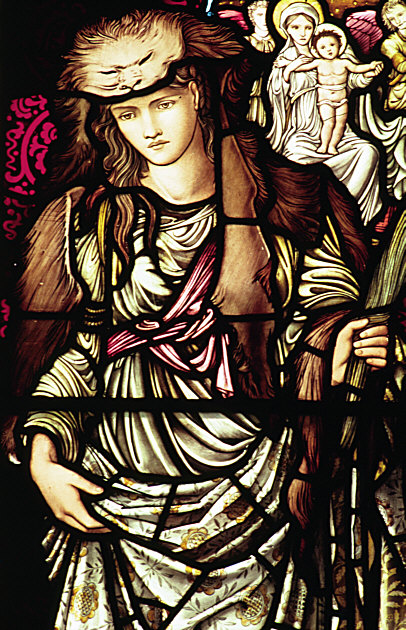
I participate in a newsgroup about stained glass and a discussion was started recently concerning the fate of 65 Catholic churches in the Boston Diocese which are to be closed. Here is the first posting which triggered the discussion:
"Mary Immaculate of Lourdes Church in Newton, Massachusetts
www.maryimmaculateoflourdes.org is one of the 65 churches proposed for
closing in the Boston Archdiocese. Since it is in a local historic
district created under State Law (Chapter 40C of the Massachusetts General
Laws), no exterior architectural features can be altered without permission
of the Newton Upper Falls Historic District Commission.
Nevertheless, the diocese's closing manual says that windows will be
offered to other churches and those windows that cannot be removed safely
(since the church was built in 1910, most would fall in this category)
will be destroyed (to prevent them from winding up on e-Bay according to
the diocesan spokesman). Does any one have any experience with other
closings and this procedure, conflicts between dioceses and civil
authorities over protected buildings, and generally stopping the
destruction of precious artifacts under Canon Law?
The windows which can be seen in a separate section of the web site are by
F.X. Zettler. Any definitive statements from general sources on the
value of Zettler windows would be of use. There's some beautiful interior
art by Professor Gonippo Raggi, who painted more than 100 churches in North
and South America and in Europe, including several basilicas and
cathedrals including the designated for closing Pro-Cathedral of
Newark, New Jersey. Statements of the value of Raggi's work by
contemporary authorities, not just the two Popes and three kings who
honored him, would be valuable as well."
Alderman Brian Yates
I will also add the post made by Tim Orwig of Boston University:
"Yes, churches have closed in other cities. But the Roman Catholic Archdiocese
of Boston is closing 65 churches all at the same time. Furthermore, the
development pressures in Boston are extraordinarily high and the
Diocese is trying to pay off its lawsuit debts, so the likelihood is
that most of these buildings will be destroyed for redevelopment. Besides that, the
churches are all run by a central authority which basically ignores most community requests. It has also repeatedly proven itself an ardent foe of preservation.
No, there is likely to be unprecedented destruction of cultural resources in
Boston."
Tim Orwig
Boston University
I have no first-hand knowledge of the churches involved here. I have only visited Boston a couple of times and have never seen or entered any of these particular 65 churches. I do feel sure that some of them, at least, are of architectural merit and worthy of preservation in some form or other - religious or secular - but I cannot pass an opinion as to whether these are 'treasures' on a national scale. However, what BLOWS MY MIND is the suggestion that works of art might be destroyed "rather than have them end up on Ebay"!
What is so BAD about Ebay that makes it "a fate worse than total destruction"??
This attitude seems to me to be every bit as bad as the ravages of John Knox in the early days of the Scottish Reformation or Henry VIII's destruction of the English monasteries.
Do not misunderstand me, I am not advocating the sale of church artifacts on Ebay. For me that would have to be a last resort, though still infinitely preferable to total destruction.
What is wrong with carefully dismantling the windows (and other artwork) and carefully packing them in boxes and putting them in storage until another generation is born which better appreciates fine art and history? Whereas the Catholic Church is undoubtedly short of cash I cannot believe that there is a shortage of storage space.
That anyone could even THINK of destruction as an option is beyond my comprehension.
Two stories come to mind here. The first concerns an artifact called the Ruthwell Cross. This important and very early (5thC? 6thC?) teaching cross was outside the parish church in Ruthwell in SW Scotland. At the time of the Reformation orders came down from Knox and his followers in Edinburgh that all 'symbols of idolatory' had to be destroyed and that the Ruthwell Cross was judged to be such a symbol. At first the Minister there ignored the orders but eventually the pressure reached a point where he had to do something. What he did was to partially follow his orders - he did break up the cross but, rather than total destruction, he carefully broke it into 3 or 4 large pieces which he then buried under the floor in the church.
The cross remained buried, and forgotten, for over 200 years before it was discovered and re-assembled in a more enlightened age - the 19thC - and it is now carefully preserved in the church at Ruthwell.
The other story concerns a very fine window by Henry Holiday which was made for Drew University in 1883. In 1937 the library where it was housed was demolished and the window was put into storage and forgotten about. It was finally "rediscovered" in the 1978 and is now proudly displayed in the lobby of the new library.
The moral of both of these stories is that "times change" and at any given time the 'powers that be' have a duty to preserve things that might be valued by later generations. This standard should probably be applied to some of these churches in their entirity but if that is not possible then at least let the standard be applied to stained glass, statuary and other works of art which can so easily and inexpensively be stored.
"Mary Immaculate of Lourdes Church in Newton, Massachusetts
www.maryimmaculateoflourdes.org is one of the 65 churches proposed for
closing in the Boston Archdiocese. Since it is in a local historic
district created under State Law (Chapter 40C of the Massachusetts General
Laws), no exterior architectural features can be altered without permission
of the Newton Upper Falls Historic District Commission.
Nevertheless, the diocese's closing manual says that windows will be
offered to other churches and those windows that cannot be removed safely
(since the church was built in 1910, most would fall in this category)
will be destroyed (to prevent them from winding up on e-Bay according to
the diocesan spokesman). Does any one have any experience with other
closings and this procedure, conflicts between dioceses and civil
authorities over protected buildings, and generally stopping the
destruction of precious artifacts under Canon Law?
The windows which can be seen in a separate section of the web site are by
F.X. Zettler. Any definitive statements from general sources on the
value of Zettler windows would be of use. There's some beautiful interior
art by Professor Gonippo Raggi, who painted more than 100 churches in North
and South America and in Europe, including several basilicas and
cathedrals including the designated for closing Pro-Cathedral of
Newark, New Jersey. Statements of the value of Raggi's work by
contemporary authorities, not just the two Popes and three kings who
honored him, would be valuable as well."
Alderman Brian Yates
I will also add the post made by Tim Orwig of Boston University:
"Yes, churches have closed in other cities. But the Roman Catholic Archdiocese
of Boston is closing 65 churches all at the same time. Furthermore, the
development pressures in Boston are extraordinarily high and the
Diocese is trying to pay off its lawsuit debts, so the likelihood is
that most of these buildings will be destroyed for redevelopment. Besides that, the
churches are all run by a central authority which basically ignores most community requests. It has also repeatedly proven itself an ardent foe of preservation.
No, there is likely to be unprecedented destruction of cultural resources in
Boston."
Tim Orwig
Boston University
I have no first-hand knowledge of the churches involved here. I have only visited Boston a couple of times and have never seen or entered any of these particular 65 churches. I do feel sure that some of them, at least, are of architectural merit and worthy of preservation in some form or other - religious or secular - but I cannot pass an opinion as to whether these are 'treasures' on a national scale. However, what BLOWS MY MIND is the suggestion that works of art might be destroyed "rather than have them end up on Ebay"!
What is so BAD about Ebay that makes it "a fate worse than total destruction"??
This attitude seems to me to be every bit as bad as the ravages of John Knox in the early days of the Scottish Reformation or Henry VIII's destruction of the English monasteries.
Do not misunderstand me, I am not advocating the sale of church artifacts on Ebay. For me that would have to be a last resort, though still infinitely preferable to total destruction.
What is wrong with carefully dismantling the windows (and other artwork) and carefully packing them in boxes and putting them in storage until another generation is born which better appreciates fine art and history? Whereas the Catholic Church is undoubtedly short of cash I cannot believe that there is a shortage of storage space.
That anyone could even THINK of destruction as an option is beyond my comprehension.
Two stories come to mind here. The first concerns an artifact called the Ruthwell Cross. This important and very early (5thC? 6thC?) teaching cross was outside the parish church in Ruthwell in SW Scotland. At the time of the Reformation orders came down from Knox and his followers in Edinburgh that all 'symbols of idolatory' had to be destroyed and that the Ruthwell Cross was judged to be such a symbol. At first the Minister there ignored the orders but eventually the pressure reached a point where he had to do something. What he did was to partially follow his orders - he did break up the cross but, rather than total destruction, he carefully broke it into 3 or 4 large pieces which he then buried under the floor in the church.
The cross remained buried, and forgotten, for over 200 years before it was discovered and re-assembled in a more enlightened age - the 19thC - and it is now carefully preserved in the church at Ruthwell.
The other story concerns a very fine window by Henry Holiday which was made for Drew University in 1883. In 1937 the library where it was housed was demolished and the window was put into storage and forgotten about. It was finally "rediscovered" in the 1978 and is now proudly displayed in the lobby of the new library.
The moral of both of these stories is that "times change" and at any given time the 'powers that be' have a duty to preserve things that might be valued by later generations. This standard should probably be applied to some of these churches in their entirity but if that is not possible then at least let the standard be applied to stained glass, statuary and other works of art which can so easily and inexpensively be stored.
Tuesday, July 13, 2004
Sunday, July 11, 2004


Subscribe to:
Posts (Atom)